
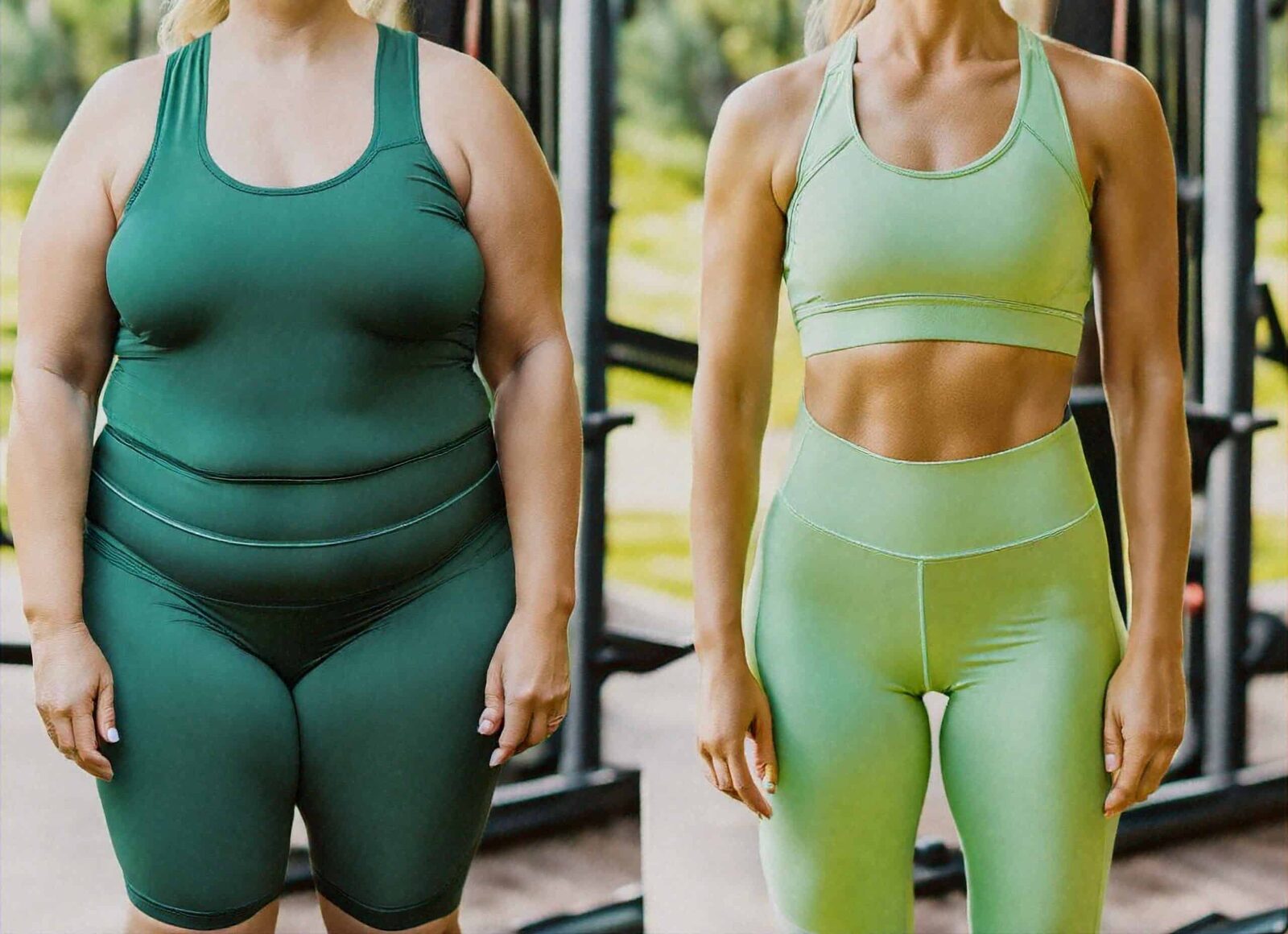
Strength training helps in every area of your health and it is critical for weight loss maintenance, strength and longevity.
When it comes specifically to fat loss, this is one area where the internet tends to overpromise. Muscle supports fat loss- it doesn’t replace the fundamentals.
Women do not accidentally “bulk.”
Realistic muscle gain rate for women: 0.25, 0.5 lb of muscle per month is considered excellent progress.
For every 5 pounds of true lean muscle gained which for most women takes 6 months to 2 years of consistent, intentional training- you increase your daily calorie burn by roughly 30, 60 calories per day.
For most men, gaining 5 lbs of true lean muscle typically takes 3, 6 months under very solid training conditions.
What body recomposition looks like:
You lose fat while gaining or preserving muscle, so:
The scale may barely move
Clothes fit looser
Waist + hips shrink
Muscle tone + shape improve
Metabolism gets stronger
This is why progress photos, measurements, and how you feel matter more than weight.
What body recomposition doesn’t look like:
The scale goes up- it’s improbable that one gains 5 lbs of muscle in a month.
Clothes may still fit or they feel a little snug
Loss of definition
Feeling sluggish
If strength training isn’t the magic fat-loss switch after 40… then what actually matters?
Here’s the truth most women aren’t told:
👉 Hormonal balance:
After 40, shifts in estrogen, progesterone, insulin, and cortisol change how your body stores and releases fat. When hormones are out of balance, fat loss becomes harder, no matter how “clean” you eat or how hard you work out. Supporting hormones through nutrition, timing, and recovery isn’t optional at this stage, it’s foundational.
👉 Metabolic function (not just calories in/calories out):
Fat loss after 40 is less about how little you eat and more about how efficiently your metabolism works. Years of dieting, under-eating, or overtraining can slow metabolic function, making weight loss feel impossible. The goal is to restore metabolic health so your body is willing to burn fat again, not defend it.
👉 Blood sugar regulation
Unstable blood sugar drives cravings, energy crashes, fat storage, and stubborn belly weight. When glucose and insulin stay elevated, your body prioritizes storing fuel instead of burning fat. Learning how to eat to stabilize blood sugar can dramatically improve fat loss, often without eating less.
👉 Stress + cortisol management
Chronic stress keeps cortisol elevated, signaling your body to hold onto fat for “survival.” This is why doing more cardio, sleeping less, and pushing harder often backfires after 40. Managing stress isn’t a luxury, it’s a metabolic requirement for fat loss at this stage of life.
👉 Eating in a way your body can actually respond to now
What worked in your 20s or 30s may no longer work, and that’s not a failure. Your body now needs enough protein, strategic carbohydrates, proper meal timing, and consistency to release fat.
The FAT RESET Framework (Fat Loss After 40)
1️⃣ Reverse and support first
Before pushing workouts, the body has to feel ‘balanced’. That means stabilizing blood sugar, improving sleep, reducing chronic stress, and addressing nutrient gaps.
Goal: Calm the system so fat loss can actually happen.
2️⃣ Eat to regulate hormones, don’t focus on calorie count
Instead of counting calories, the focus is on adequate protein, strategic carbohydrates, healthy fats, and meal timing that supports hormones and metabolism.
Goal: Send the signal that fuel is available so your hormones start working with your body and not against it!
3️⃣ Restore metabolic flexibility
Years of dieting, stress, and inconsistent eating blunt the body’s ability to switch between burning glucose and burning fat. The plan focuses on rebuilding that flexibility through structured meals, balanced macros, and predictable rhythms.
Goal: Teach the body to burn fat efficiently again.
4️⃣ Train to support hormones (not fight them)
Strength training stays, but with intention. Paired with gentle movement, walking, and proper recovery, training supports insulin sensitivity, muscle retention, and bone health without spiking cortisol.
Goal: Build strength and confidence without triggering stress-driven fat storage.
5️⃣ Reduce inflammation & cortisol load
Chronic inflammation and high cortisol keep fat locked in place, especially around the midsection. This step focuses on food quality, gut support, recovery, and lifestyle patterns that lower the body’s stress burden.
Goal: Remove the internal blocks that prevent fat loss.
6️⃣ Progress in phases, not extremes
Fat loss after 40 works best in cycles- reset, release, stabilize. This prevents plateaus, burnout, and rebound weight gain, while protecting hormones and metabolism.
Goal: Sustainable fat loss respects each cycle.
7️⃣ Measure more than the scale
Energy, sleep, cravings, digestion, mood, and waist measurements often improve before the scale moves. These markers tell us metabolism is healing- and fat loss is coming.
Goal: Build trust in the process and your body again.
If this feels overwhelming, you don’t have to figure it out alone. We incorporate all of these principles- nutrition, hormone support, muscle health and lifestyle factors into an individualized approach designed for your body, your stage of life, and your goals. Reach out when you’re ready- we’re here to guide you every step of the way. 💗
Let’s remember- First we lose FAT, then we get strong. Muscle is critical for maintenance. The real metabolic payoff- this is where muscle really matters!
1️⃣ Higher calorie burn during workouts
More muscle = more work capacity
You burn more calories during strength training and recover harder afterward (EPOC).
2️⃣ Better insulin sensitivity
Muscle is a glucose sink 🧬
More muscle = better blood sugar control = easier fat loss.
3️⃣ Higher “maintenance” calories long-term
Even a modest increase adds up:
•50 extra calories/day = ~18,000 calories/year
•That’s ~5 lbs of fat you don’t gain, or can lose without more restriction
4️⃣ Protection during fat loss
Muscle prevents metabolic slowdown when dieting.
That alone is huge for women who’ve dieted before.
The 4 pillars for muscle health and of successful recomposition during maintenance
1️⃣ Strength training (non-negotiable)
•3, 4x/week
•Focus on compound movements (consider Pilates)
•Progressive overload = gradually increasing resistance
👉 Cardio supports health, and lifting changes body shape.
2️⃣ Protein first
•Aim for 25, 40g protein per meal
•Spread evenly across the day
•Supports muscle gain and fat loss
Protein = metabolic insurance.
3️⃣ Individualized nutrition/ Calorie and macro ratio
•Anti-inflammatory
•Focus on quality vs quantity
•Learn hormone modulating foods
This protects hormones and muscle while allowing fat loss.
4️⃣ Hormone + stress support
Especially important for women:
•Prioritize sleep
•Manage cortisol (too much HIIT can backfire)
•Balance blood sugar (no skipping meals)
Fat loss stalls when stress runs the show.
Big takeaway ✨
Muscle doesn’t turn you into a calorie-burning furnace overnight.
It turns you into someone who:
•Can eat more without gaining
•Loses fat more easily
•Keeps results long-term
•Looks tighter at the same weight
If this feels overwhelming, you don’t have to figure it out alone. We incorporate all of these principles- nutrition, hormone support, muscle health and lifestyle factors into an individualized approach designed for your body, your stage of life, and your goals. Reach out when you’re ready- we’re here to guide you every step of the way. 💗